Image Map
Showing posts with label books. Show all posts

Thursday, May 15, 2014

Nightstand Reading


Do you keep books on your nightstand? 

Whatever I'm currently reading usually ends up there, along with other random things. 

Yesterday I looked at my nightstand and realized that I have a relatively small stack of books - just five, in fact.  Here's the list from top to bottom:

Have you read this blog?  Robyn is a friend of a friend so although I've never read her blog before, I went to the book signing here in Omaha.  As she read a couple excerpts from the book and shared her story, I knew I would like the book!  

This book is by a fellow Redbud and it is one I'm reviewing for BookLook Bloggers.  I'm not too far in, but I can tell that it is a book that has the potential to impact many people.  I am looking forward to writing a review when I finish it.

It is impossible to be a good Christian writer and not read Anne Lamott, right??  Although I've known of Anne for years, I haven't read any of her books.  But when a different Anne (of Modern Mrs. Darcy) posted Shauna Niequist's book recommendations for writers and it contained not one, but TWO Anne Lamott books, I knew it was time.  I'm so looking forward to digging into these.

Another Anne Lamott!  And also from Shauna Niequist's recommended list.    

I love this little book by Lauren Winner.  This is probably the third or fourth time I've read it!

Also hanging out on my nightstand is a book of crossword puzzles, a book on toddler speech, a bottle of melatonin, Starbucks tea, lotion, Kleenex, and nine bobby pins.


What's on YOUR nightstand??


**All opinions are my own.  Forgiving Our Fathers and Mothers was given to me by the publisher in exchange for a review that will be posted soon.  All other books were purchased on my own or given as gifts.

Monday, May 12, 2014

Currently Reading: Where the Wind Leads


Compelling.

That is what I would say if I were asked to sum up Where the Wind Leads in one word.

It is "a refugee family's miraculous story of loss, rescue, and redemption" written from the perspective of the son, Vihn Chung with Tim Downs.

Chung begins by laying out his family's history in their homeland of Vietnam.  The story is tumultuous as the family survives various coups and wars.  Each time they are uprooted and upset, yet they press on.

Eventually they decide that they cannot live this way any longer and in 1979 they become "boat people" who sail away from Vietnam in hopes of finding a better life.

Intertwined with the Chung's story is the story of Stan Mooneyham, the second president of World Vision.  When a friend challenged Stan to learn more about the boat people and find a way to help them, Stan resisted at first.  Soon, however, he was convinced that his Christian organization should be helping these refugees who were fleeing their country for safety, yet unable to find a country to welcome them.

Chung's description of their time on the boat and as new refugees is agonizing.  Eventually they are rescued and, with World Vision's help, are allowed to enter the United States.  There are still difficulties once the family is settled in Arkansas, but they work hard and persevere.  Chung fulfills his father's dream when he graduates from Harvard Medical School.  Chung now lives and works in Colorado Springs, Colorado and serves on the board of World Vision.

This is an excellent book.  Chung (and Downs) told a gripping, riveting story and appropriately interwove both humor and history.  I am more familiar with stories of immigrants, but this book opened my eyes to the experience of refugees.

I was a bit worried about the ending.  In the last chapter, Chung asks questions about why his family was rescued and why others were not.  I was afraid that the book might turn the corner to preaching a prosperity gospel (e.g. "They called upon God and therefore all their problems were taken away").  But it didn't.  I was impressed the way Chung turned the question around, explaining that why they were the ones rescued isn't the correct question.  Instead he says that he should ask the question, "What does He expect me to do now?"

Chung answers the question with this: "Now that I am safely ashore, He expects me to send the boat back for someone else."  

I was left with a renewed realization of how much I had been given in this life and, as Chung says, "I believe that blessing is something I am expected to pass on to other people in any way I can."

Please note that all the author royalties from this book are donated to World Vision.


** I received a free copy of this book from the publisher in exchange for an honest review.

Wednesday, April 9, 2014

currently reading: Bittersweet


Try Grammarly's plagiarism checker free of charge because when your mother told you that "imitation is the sincerest form of flattery," she wasn't giving you a free pass to plagiarize! (Plus, she was quoting someone herself!)


My book review in fewer than 10 words: 

IT IS SO GOOD! GO BUY A COPY IMMEDIATELY!!!!!!!

My book review in more than 10 words:

If you've read my review of Shauna Niequest's book Bread & Wine, it will probably come as no surprise that I loved this book as well.  Bittersweet: Thoughts on Change, Grace, and Learning the Hard Way is Shauna's second book, which she wrote in between Cold Tangerines and Bread & Wine.  I am just now starting Cold Tangerines, which means that I have read her books exactly opposite as to how she wrote them.

As the title suggests, Bittersweet is written out of a season of loss and frustration in Shauna's life that will later yield good lessons.  This is a book that not everyone will understand.  But if you, too, have had a season where it feels like you are just bracing yourself for the next blow, for whatever disaster God or fate could send you next, this may be the book you need to read.

Bittersweet is a collection of essays that cover all sorts of things: the loss of a job and the loss of a baby.  Moving away from loved ones and making new ones.  Cooking and gatherings round tables.  Grace, grace, and more grace.  Friendships, families, motherhood and more.

In "Grace is the New Math," she writes of keeping a tally of the good and the bad of a person's life and calculating up their worth.  "Grace is smashing the calculator, and using all the broken buttons and pieces to make a mosaic."

This book came at the perfect time in my life.  I am, just now, slowly, calling myself a writer.  I haven't been able to say it aloud to someone, but I'm working on that.  In "Love Song for the Fall" Shauna writes about writing.  She says, "...it's hard work, fraught with fear and self-consciousness..."  It is silly, of course, but I assume that fantastic writers sit down at the computer and the correct words flow out with no effort.  When I read that she had to force herself to sit down and work, suddenly writing was normalized for me.  This is difficult for everyone.  This is not always enjoyable.  This takes time.  This. is. difficult.

Multiple essays are on the subject of miscarriage.  Although I would never be bold enough to say that I understand miscarriage, her words gave me a window into what mothers must be feeling after the loss of a baby.  She writes of remembering the due date and thinking about "what might have been."  She tells readers to "say something" after a tragedy, even if it is awkward and you are not sure what to say.  I told my husband that if we know someone who miscarries, I'd like to buy them this book in addition to being there for them.  What I meant was that I wanted to give them words when they might not know how to express what they are feeling and, since I can't relate to that experience at this point in my life, I want to hand them a reminder that they are not alone.  

Earlier I said, "Go buy this book immediately!"  I was serious.  


Monday, March 24, 2014

So a post-evangelical walks into a Christian bookstore...


We left our Bibles at church one day, each thinking the other had grabbed them.  Our hands were full of the regular things (coats, a diaper bag, and a toddler clutching his coloring sheet) so we didn't realize we'd forgotten them at first.  Later, when we tried to retrieve them, they were nowhere to be found (this is one of the downfalls of church meeting in a middle school).

That bible had been special to me, a gift given by a sweet friend in college.  I didn't want to replace it because I wasn't ready to admit that it was actually gone.  But after a month or so, I gave in and told my husband with a sigh that I was ready to buy a new one.

"We'll need to find a Christian book store."  I was not enthusiastic.

"Look on Amazon." He suggested.

Caleb knows that I prefer to shop online for most things, so I know he was trying to be kind.  But you simply can't buy a Bible online.  At least, I can't.  I have to hold it in my hands and feel its weight.  I need to be sure there is enough room to underline and write in the margin.  I want to turn the tissue-papery pages and feel the leather cover.  (Of course, it is a luxury to be this choosy about a new Bible, but since I was paying money for one, I wanted it to be the right one)

As much as I dreaded it, I had to go to a Christian bookstore.

There was a time when I loved Christian bookstores.  It used to be my place.  After all, I love books and I love Jesus.  Surely this was the perfect combination.  But my faith has changed over the past few years.  I have fought with (and against) Christianity.  I have struggled to find a place in the Church and struggled even more at finding my voice within the Church.

Part of me wanted Christian bookstores to still be my place.  To go back to a time when Christianity was easy and comfortable.  When I didn't have so many questions.  Or (more accurately) when I just didn't ask those many questions.

But I went anyway, begrudgingly, but knowing that it would probably be good for me.

As I pushed open the doors I remembered what I disliked about these stores: it was Christianity commercialized.  Kitschy plates and figurines.  Bible verses snatched from their contexts to be embroidered on bags and t-shirts.  "Christian romance" books.  Little bits of Jesus packaged up into bland communion wafers.  Books and movies were tidily arranged, but I couldn't help but think of the Christian publishing world and how it isn't always so Christ-like.

I located the Bible section, and soon was opening up the boxes to find the right one.  A few aisles up, I noticed that they had a section for Catholic Bibles, unusual for these types of bookstores.  I nodded with silent approval.

Tired of my search for the right Bible, my toddler son raced down the aisles, his internal GPS lead him straight to the very thing I had tried so hard to avoid: the singing vegetables.

"Come on, kiddo!  Mama needs your help to pick one!" I said, scooping him into my arms.

As I carried him back, I kept an eye on the shelves we passed.  This bookstore surprised me.  All the kitsch was there (of course).  But so too were Bibles containing the Apocrypha.  And cards for the saints.  And toys that weren't outwardly religious.  The line between sacred and secular was just a little thinner here.  The lines separating denominations were less noticeable as well.  I liked that.

I said before that I struggled to find a place in the Church.  But that statement wasn't completely correct.  I am struggling to find a place in the Church.  Present tense.

I know when I'm not welcome somewhere and it feels easier to slink out the backdoor, unnoticed, than try to fit in.  I don't want to make a scene, so when I disagree with someone at Church, my natural tendency is to brood silently and then leave to find a place where I am accepted.  I haven't actually done that yet, but I have thought about it more than once.

That bookstore brought me a bit of hope, in a strange way.  Walking in, I was sure that the store was going to fit a narrow demographic of Christians.  A demographic that didn't include me.

Deep down, I think I'm waiting for someone to tell me that I'm not a Christian if I hold to certain beliefs.  Or at least not the right kind of Christian.  That seems like a silly, irrational fear, but, truthfully, many Churches and Christians would classify me that way.

The bookstore gave me hope because it was a small sign that evangelicalism might be changing.  That there might be room for ecumenism.  That there might be room for me.
 

Friday, March 7, 2014

The Company I Wish I'd Known About in College: CampusBookRentals


When I was in college, each semester started with a scramble to find textbooks.  I needed to find them quickly, but I also needed find them at the best price possible.  Since I was at a small college and within a fairly small major, I knew most of the people in my classes so I could usually find someone who was selling or renting their books.  Sometimes it worked out that a friend and I had books that the other needed so we would simply trade for the semester.  Still though, there were times when I couldn't find a cheap copy of the book I needed, so I would go to the campus book store and begrudgingly pay whatever they were charging for the book.  This was especially frustrating when it was a book that I knew I wouldn't want to keep.  Like most college students, money was tight and, as much as I love books, I hated paying a large sum for a little book I would use for such a short while.


Since I graduated college, I found out that there was a much easier way to find textbooks and save money at the same time.  CampusBookRentals is a company that rents textbooks to students saving between 40-90% off the prices in their campus bookstore!

Some other great perks include:
- free shipping both ways
- ability to highlight, underline and take notes in the textbooks (!)
- flexible renting periods
- 21 day risk-free returns

Perhaps you're one of those people who plans on keeping all your books from college?  With their new RentBack program, you can rent your book out to other college students and make money off of it each semester.

There's one last perk of working with CampusBookRentals!  For each book rented, they donate a portion of the proceeds to their partner, Operation Smile, a "mobilized force of medical professionals and caring hearts who provide safe, effective reconstructive surgery and related medical care for children born with facial deformities such as cleft lip and cleft palate."  Although cleft lips and cleft palates are easily repaired, not all children have access to the surgery and instead have problems with their speech, eating,  teeth and ears.  Operation Smile works to "deliver safe surgeries to places where access to surgery may not be available, frequently in the developing world".

If you're a college student, I hope you check out this video below that explains a little more about CampusBookRentals.


**I received compensation in exchange for writing this post.  Images and video used with permission.


Tuesday, February 25, 2014

currently reading: Notes from a Blue Bike


Do you ever read a book and find yourself thinking (or shouting), "yes! yes!!" the whole time?  Or, if you're an annotator like me, you keep writing it in the margins, accompanied by a mixture of stars and underlining and brackets and arrows?  When I like a book, you can tell just by flipping through because it will be embellished with my pencil markings.  And if you were to pick up this book, I think you'd realize pretty quickly that I liked it.  It resonated with me in a deep way.  


Tsh Oxenreider is the founder of TheArtofSimple.net, a website inspiring people to live simply.  Her latest book is Notes from a Blue Bike: The Art of Living Intentionally in a Chaotic World.  In this book, Tsh shares about the journey her family has taken to duplicate the slower lifestyle they enjoyed overseas as they have transitioned back to the States.

The book is divided into seven sections.  With an introduction and a conclusion as bookends, Tsh writes about the five areas in which they have chosen to be intentional: food, work, education, travel, and entertainment.  Notes from a Blue Bike is a collection of essays with tips for simple living sprinkled throughout, instead of a "how-to" book.

I hadn't heard of Tsh before this book or seen her website, so this was truly my first introduction to her writing.  And I loved the book!  I loved the essay format and hearing how their family decided upon these intentional steps and reading how it actually worked within the family.  I appreciated all the sections (really!), but, at this point in life, the work and education sections held the most meaning to me.

In the work section, Tsh talks about managing a business from her home with her husband.  She writes about finding time to write in the midst of being a busy mom with little ones at home.  It was a message I needed to hear: that it's okay for me to take time to do something I love.  She writes of slowing down and setting limits, but also of valuing your work and treating it like it is "worthy of my dedication, practice, focus, and excellence. (Because it is)."  I was interested to hear how she and her husband manage the business together, but I also appreciated that she included examples of many other families with different work schedules who have made adjustments in order to find what works for them.  In other words, Tsh isn't expecting that what works for her family is what will work best for mine.    

I also appreciated the chapter on education as Tsh shares their journey to find the right fit educationally for each child, each year.  After swearing that she would never homeschool her children, Tsh spends a year homeschooling and falls in love with parts of it.  But later they decide that the best decision for their family is to send their children to public school.  She writes about the value of exposing your children to books and of giving them room to be creative.

Other reviewers have mentioned that Tsh's life doesn't seem simple and I understand where they are coming from.  Her life certainly isn't straightforward - she's lived all over, she works strange hours, and her children have had multiple schooling options within a few years.  Her life is complicated.  But I believe she wants to live a full life and is choosing to do so as simply as possible.  If you're looking for a practical, step-by-step guide to simple living, you will probably be disappointed.

Notes from a Blue Bike is balanced, which is what I like about it.  The main message is to find what is important to you and then adjust your life to reflect that.  Tsh doesn't write expecting that every reader will move to a farm and live off the land.  She writes for ordinary people and ordinary families looking to make small changes.  And I like that because I am an ordinary person with an ordinary family.  I hope that you read it and, if you do, let me know what you think of it!


I was given a copy of this book from BookLook Bloggers in exchange for an honest review.


**Like what you're reading?  Consider following me on Bloglovin' or Feedly to get regular updates!

Sunday, February 9, 2014

currently reading: The Question That Never Goes Away


I think I should rename this series "books from the pile on my bedside table".  And by 'bedside table' I mean the metal folding chair that I use as a bedside table.  My life is so glamourous!  ;)  This week I have been actively reading three books: one to review, one to enjoy, and one to help my husband and I figure out how the heck to parent our toddler thoughtfully.

The book I am reviewing this week is The Question That Never Goes Away, courtesy of BookLook Bloggers (formally BookSneeze).


Philip Yancey is the author of Where Is God When It Hurts?, which he wrote in 1977 to explore suffering from a Christian perspective.  Now, over 30 years later, he released a sequel: The Question That Never Goes Away.  Since writing his first book, Yancey has become somewhat of an expert on the topic of pain, receiving countless letters from hurting people and numerous speaking invitations.  The Question That Never Goes Away is based off of Yancey's personal experiences with three different events: the four year long siege of Sarajevo, the 2011 tsunami in Japan, and the 2012 shootings at Sandy Hook Elementary School in Newtown, Connecticut.  Each of these events were horrific and ghastly in their own way, but they raised the same question: Where was God during this and why did He let it happen?

I was thrilled to see this book available for review from BookLook Bloggers.  I've read Where is God When it Hurts? and Disappointment with God (both by Yancey) before and thought I would like this one as well.  I wasn't disappointed.  Yancey is a thoughtful, compassionate author.  Since I am interested in the theology of suffering, I have read books by multiple Christians authors on the subject.  Yancey is one of my favorites.  Unlike many others, he avoids offering platitudes or prescriptive advice.  Yancey points to Jesus' example of avoiding answering why suffering exists, instead focusing on our response to suffering.  I appreciate that Yancey faces the issue of suffering head-on and writes of how he was affected personally rather than tackling the subject from a strictly academic perspective.

Some may be disappointed by this book.  Yancey doesn't offer a definitive answer on suffering.  But that is what I like about it.  I feel that any answer he could have given would have probably fallen short.  He wrote rawly about his experiences and emotions in Sarajevo, Japan and Newtown and instead of tying them up with a flippant clique about God's will, Yancey lets the heaviness of these situations resound.  Yancey is an author who seems comfortable admitting that we don't have all the answers, but instead, gives us tools and encouragement to continue living under the weight of unanswered questions.  This book is so important for all Christians would read - I wish that more people would take the time to consider this topic seriously before spouting off harsh words following tragedies.


**I received a copy of this book from BookLook in exchange for an honest review.
**This post contains Amazon Affiliate links

Friday, January 17, 2014

Books for the Journey: Women and Christianity


When I was an undergrad at our Christian college, I had a group presentation about women's roles in the Church.  If I recall correctly, we had about a month to prepare.  That sounds like a lot of time, but a month in the middle of college (with four or five other classes, extracurricular activities and lots of other homework assignments to juggle) goes by pretty quickly.  Our professor's goal was for us to take that month, do an in-depth study and emerge with a conclusion.  But a month isn't a lot of time to tackle a subject that complicated!

Up to that point, I had always been taught (and believed) that women couldn't be pastors or elders or have leadership over men in churches.  But I was beginning to question all that.  I saw the inconsistencies in hermeneutics, the incomplete arguments and knew there must be more to the issue than I had been taught.  But, unfortunately, it was a lot easier to just parrot the opinions I'd been given for years, find a few sources, make my powerpoint and take my easy A.

In a lot of ways, I'm disappointed with myself that I didn't go deeper then because I stood in front of a class and taught complementary views even when I had hesitations.  But to be fair, I think this issue (and many others) has been a lot more of a journey, than an assignment.  I've been researching and discussing this issues for several years now and, while I feel I've made a lot of progress, I don't think that the issue is closed to me yet.  I'm still learning from new writers and friends and still forming my opinions.  Perhaps I'll always be.

Last week I wrote a review of the book Jesus Feminist by Sarah Bessey, which sparked a fun discussion in the comment section and gave me a chance to pull all that knowledge I've been storing up.  As I responded to comments, I realized that I just kept recommending books, which is in line with my undergrad experience.  Majoring in psychology meant a lot of papers and even more references.  And it doesn't hurt that I just happen to like books. ;)  Because of that post, I decided to put together a list of some of my favorite books on women and Christianity.

I'm labeling this "books for the journey" because I want to encourage people to view it that way.  It certainly has been a journey for me, and, in talking with other people, I feel like that's a common sentiment.  I don't expect a complementarian to read my post about Jesus Feminist and immediately change their mind about women's roles in the Church.  But if something I write piques their curiosity and that curiosity causes them to pick up a book and that book causes them to reconsider, THAT is worth it to me.


So here are the books that have helped me on this journey of discovering where women fit into Christianity.  I'm not saying that I agree 100% with each of these books, but each has caused me to think and helped me develop a more robust understanding of feminism and Christianity.  It is VERY hard for me to write 3-4 sentence book reviews, but I'm just giving a quick summary to explain why I'm recommending it.


1. Jesus Feminist: An Invitation to Revisit the Bible's View of Women

Obviously, I liked this book.  You can read my whole review here, but I just say a quick bit here as well.  I appreciated Sarah's gracious tone and how she prays "for unity beyond conformity" (p. 5).  She advocates for "grace and kindness...especially for those who we believe are profoundly wrong" (p. 5).  If you're just beginning to research this subject, this book would be a good one to start with.


2. Half the Sky: Turning Oppression into Opportunity for Women Worldwide

Half the Sky is another great book to read if you're just beginning this journey.  And when you do get to the other books on this list, you'll see Half the Sky quoted over and over again!  Kristof and WuDunn explore how women all over the globe have been subjugated simply because of their gender.  Oh, and there's also a documentary by the same name if you feel like I'm listing too many books!  


3. Half the Church: Recapturing God's Global Vision for Women

This title is obviously a play off of Half the Sky, but it's on another important topic: women in the Church.  Carolyn Custis James encourages her readers to look at these issues through a global and historical lens, instead of simply through our American perspective.


4. A Year of Biblical Womanhood: How a Liberated Woman Found Herself Sitting on Her Roof, Covering Her Head, and Calling Her Husband "Master"

I read Rachel's book last year and loved it (although her first book, Evolving in Monkey Town, is still my favorite!).  Rachel spends a year examining (and living!) God's commands for women.  It's funny and thought provoking.  So much more I could say about this book, but I'll leave it at this: read it.


5. Slaves, Women & Homosexuals: Exploring the Hermeneutics of Cultural Analysis

If you're looking for a book that goes in depth on the hermeneutics of women in the Bible, this is it.  It is very academic and I still haven't made it through, but what I have read has been wonderful.  It comes recommended by my friend and mentor, Marlena Graves, who is one of the most trustworthy people I know.


6. Good News for Women: A Biblical Picture of Gender Equality

I read this for a college class my senior year and it was the first book I read from an egalitarian perspective.  Until that point, I had always been taught from a complementary perspective, both implicitly and explicitly.  Groothuis' book gave me the confidence and the curiosity to continue on this journey.


7. ProLife Feminism: Yesterday and Today

 This is in my "to read" pile, but comes highly recommended.  Sometimes in conservative Christian circles, I think we see the word 'feminist' and immediately think of abortion.  And I think that's a dangerous correlation.  Certainly, there are many people who are both feminist and pro-choice.  But this book shows that there is a very strong history of feminists who are also pro-life.  (Side note: I hate the terms pro-life and pro-choice terms as they are misleading and inflammatory, but I am using them here because I think it is the easiest way to explain what I mean)


And if you're looking for something FREE that you can read right now, I recommend this article by The Junia Project dealing with I Timothy 2:12, which is one of the most confusing verses in this conversation.  And make sure you read the comments too!


Okay, it's your turn!  What books have helped you?

**This post contains Amazon Associates links

Wednesday, January 8, 2014

currently reading: Jesus Feminist


"exploring God's radical notion that women are people, too"


"I'll never fit in with Christian women..."

I said these hushed words to my husband as we left a small group one night.  

Looking back, I can see that it was kind of a silly statement.  The night had been discussions of children and cooking and clothing - things that I actually do enjoy, but they felt frivolous at the time.  I was missing deep conversation and connection.  During the long, lonely hours as a SAHM I was (am) mentally wrestling through all that I read on popular Christian sites.  

Why were these amazing debates taking place online and in books where Christian women spoke with strong voices and yet, when I went to Church, I felt like all the women talked about were recipes and kids and decorating and dieting?  Was the conversation only happening online?  

Reading Sarah Bessey's book, Jesus Feminist
, I'm realizing that I was wrong ( and that I should probably get used to that feeling).  I think that all over Christendom these women - strong women who want to challenge and to be challenged - do exist.  But maybe, like me, they're used to churches telling women to be "gentle and quiet", but not telling them to use leadership skills.  And they're used to churches with a "brain-check" at the front door next to the coat check.  And they're used to feminism being "the f word" in Church.  And so, like me, these women have decided to just take the easy route and keep their voices to hushed tones.

But what I'm realizing is that strong women who want more from the Church are all around me.  And I'm so excited to see where that takes me in the next year of hard conversations and growing friendships and women challenging women to do more and be better.

Whew.  All that was just an intro to my thoughts on the book.  I'll try to hurry up after this.  :)  


{I am a bit self-conscious about posting pictures of myself...and I am a Jesus feminist ;) 
 Also, if you didn't know, Sarah collected pictures of people with similar signs.
I didn't come up with this idea on my own. }


 surprised me.  I expected Sarah Bessey's writing to be bold and scandalous and very heavy on research.  And it was, in some ways.  But what surprised me was how personal this book was.  Sarah wrote to ME.  Her words were like a thick blanket wrapped around my shoulders, cocooning and comforting.  She asks her readers to "lay down our ideas, our neatly organized Bible verses, our carefully crafted arguments" (p.1) and instead, invites us to a conversation.     

From the beginning, Sarah wrote gently and kindly and truthfully.  While many people might have negative stereotypes they associate with the word "feminist" (read: angry, bitter), Sarah's tone is completely different.  It was a bit off-setting for me at the beginning because this book was not what I expected.  If you're looking for a book goes through each verse pertaining to women and painstakingly proves (or disproves) why you should be a feminist, this is not the book you're looking for.  This book is about leaving our entrenched sides and coming together to see the Kingdom of God at work.  It was obvious that the book was well-researched, but it was not scholarly.  

I loved how Sarah used her own life stories (and those of her friends) in this book.  She writes of childhood and childbirth, marriage and ministry, hurts and happiness.  She combines stories and Scriptures and quotes and hard truth, and when it all comes together, it works.  It captured my attention and engaged both my brain and my heart.  

One part stuck out to me: "Often when a woman exhibits leadership, she's accused of having that Jezebel spirit.  I look forward to the day when women with leadership and insight, gifts and talents, callings and prophetic leanings are called out and celebrated as Deborah, instead of silenced as a Jezebel" (p. 92)  Yes.  Yes!  I wish this wasn't revolutionary in western Christianity, but it is!  And I too look forward to the day when women are celebrated as leaders, scholars and pastors in the Church.  

I've read criticism that Sarah's book didn't go far enough.  And I understand where those people are coming from.  In some ways, I do think she could have pushed further.  But I think she ended up with a gracious book that will speak to both sides and will start the conversation rolling in churches.  Rather than focusing on the minute details, Sarah looks at the bigger picture.  To her, being a feminist is being part of the Kingdom of God here on earth.

Before reading this book, I was comfortable calling myself a Christian and a feminist.  But Sarah's book helped me delve deeper into the conflation of those, which I appreciate.  This is a book I plan to read again and will recommend to friends, both male and female.  I am already looking forward to the conversations that will take place because of Jesus Feminist
.

My rating: 5 stars


{Finished book on my little red desk}


If you've read Jesus Feminist
 (or read Sarah's blog), I'd love for you to let me know what you thought! :)

**This post contains Amazon Associates links

Monday, December 30, 2013

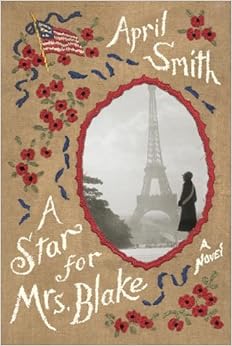
currently reading (my LAST book review of 2013): A Star for Mrs. Blake


While we were away for my husband's surgery, I was contacted about reviewing the book A Star for Mrs. Blake

 by April Smith.  I read the summary and it caught my interest so I agreed.  When we got home from the trip, I was TIRED.  It had been a long two weeks of chasing a toddler around, helping with my husband post-op and I needed a mental break.  This book was waiting for me when we got home and I thought I'd just read a couple chapters to see what I thought.  Things didn't exactly go as planned because soon I was swept away into Mrs. Blake's world and reading non-stop.  In less than 24 hours I had read the entire 334 pages!  If you want to read a little more about the book, check out my review below or look for it on sale on January 14th!


(Image from Amazon)


 is a historical fiction book set in 1931, thirteen years after the end of World War I.  The story follows Cora Blake's journey from her small town in the United States to visit the grave of her son, Sammy, in Meuse-Argonne American Cemetery with a group of Gold Star Mothers (referring to the gold star that hung on their service flags after a family member had died).

Cora Blake, a volunteer librarian, lives on Deer Isle, Maine where she cares for her three nieces, and keeps tabs on her trouble-making brother-in-law.  Living the midst of the Great Depression, Cora makes ends meet by working in the cannery and a frugal lifestyle.  When a letter comes from the US government, Cora has a flashback to the letter she received 13 years ago telling her that her only son, who had lied about his age to enlist in the Army, had been killed in action.  This letter, however, was an invitation to join other Gold Star Mothers to visit their sons final resting places in France, paid for by the United States.

With little hesitation, Cora decides she will join the pilgrimage.  She travels to New York City where she meets the group with whom she'll be traveling - four other Gold Star Mothers, a young nurse and a newly commissioned Army officer.  The women are all unique, coming from different religions, ethnicities and socioeconomic levels, which adds drama to an already emotional journey.  Once in France, Cora meets an American journalist, Griffin Reed, who was injured during the war and is now forced to wear a metal mask to cover his wounds.  When Cora tells Griffin the story of her pilgrimage, including a secret she's kept for years, he writes an article about her that brings with it a surprise ending.

A Star for Mrs. Blake is based on the stories of deceased Army Colonel Thomas West Hammond, "whose first assignment as a graduate of West Point Academy was to accompany a party of Gold Star Mothers...on the pilgrimage to France."  After I finished the book, I did some researching of my own and found that April Smith had done an excellent job of weaving historical fact within her fictional story.  The characters quickly grew dear to my heart and I was moved to tears many times throughout the book.  As I read about mothers crying over their sons graves, I found myself stopping the book for a moment to scoop my son into my arms and tell him about much I love him.  This book gave me a greater appreciation for the sacrifice of our veterans and their families and a great appreciation for my own family.

My Rating: 5 Stars

**I received an advance copy of this book from the publisher in exchange for an honest review.

**This post contains Amazon Associates links


Monday, November 18, 2013

who do you read?


Who do you read when you're trying to find the right words?

Which authors make you murmur "yes!" aloud as though you're sitting there having a conversation?  Or cause you to underline ferociously and annotate in the margins?

This summer I read Shauna Niequist's book Bread and Wine and I still haven't recovered.  I felt understood.  And the way she strung words together was magical.

Lately I've been struggling to write.  When I do get the time to sit in front of my computer, the words don't come out.  So I'm going back to the basics, going back to reading.  When I know I'm not writing well, I can at least be reading well.

So I'm going to my bookshelf and pulling out the authors I love.

Am I crazy?  Who do you read when you need inspiration?

Monday, October 14, 2013

trophy or teacher?


I'll be posting a review of this book in a few days, but wanted to share this quote tonight.


Friday, September 27, 2013

currently reading: Notes From the Tilt-A-Whirl


This book review is long, long overdue.  Usually I review a book within a couple weeks of receiving it, but this one arrived over six weeks ago!  Yikes!


I am very conflicted about this book - I'll do my best to explain why.  When I read the summary, I thought I would love this book and I was thrilled to be reviewing it.  But when it came and I actually started reading, I really labored over it.  The first few chapters were mind-boggling.  Each time I picked up the book, I literally got a headache and had to put it down within a few minutes.  I was thrown off by Wilson's style and really struggled to keep reading.  It was the first time I seriously considered not finishing a book I was given to review.  For me personally, the first chapters felt like I *was* on a tilt-a-whirl.  Since I wasn't following the book clearly, it felt like I was being spun around and couldn't tell up from down.  

Then, about four or five chapters in, I started to catch on a little bit, like I finally learned to go with the rhythm of the ride.  Soon I was pausing to marvel at Wilson's insight.  He changed the way I thought about creation, heaven and hell.  Throughout my days, I found myself thinking back to the book and looking at the world around me differently.  And isn't that what a good book is?  Not only did it change my thinking, it stuck with me and changed how I viewed life.

Overall, the poetic style of this book was difficult for me to follow.  I wasn't expecting it and I usually prefer books to be more straight-forward.  However, Wilson wrote such profound things that I want to read it again sometime.  Since I'm prepared for the unusual style, I think I'll enjoy it better.

Now that I am (finally!) finished with that book, I can start on the next two books on my list: Crazy for God by Frank Schaeffer (a gift from my sister) and The Meaning of Marriage by Tim Keller (a gift from my friend, Megan).  I'm taking a short break from reviewing books for publishers to read these two!


**A copy of this book was given to me through BookSneeze in exchange for an honest review.   


Friday, August 30, 2013

currently reading: The Tender Soldier (PLUS GIVEAWAY!)


When Simon & Schuster offered me a copy of The Tender Solider: A True Story of War and Sacrifice to review, I thought the book sounded intriguing, but I had two concerns.  First, I was afraid that perhaps it would end up being dull.  Secondly, I was concerned that it would be abstruse military and combat information.  I chose to review it any ways and quickly realized that I was completely wrong on both counts.  It turned out to be both captivating and educational.

The Tender Solider tells the story of the Human Terrain System, a social science experiment to bridge the gap between American troops and the people of Afghanistan and Iraq.  Small teams of trained individuals would work alongside the US Army to help interpret the local culture and collect relevant information.  While many people worked on this program with noble intentions, it didn't stay that way for long.  Because the program grew too quickly to make proper evaluations and adjustments, many problems emerged.  For instance, the teams were not receiving sufficient training before being sent into a combat zone.  But a major ethical complication arose: the anthropologists were helping the Army better understand the Afghanis, but that turned out to be a double edged sword because "'good anthropology' might lead to 'better killing'"(p. 115)  Many social scientists were concerned about the direction the program was heading.

The Human Terrain System is made personal in the story of Paula Loyd and Don Ayala.  Loyd was a Wellesley grad who was working as the social scientist on a Human Terrain Team in Afghanistan.  Ayala, one of her teammates, was a former Army Ranger.  As they were collecting information one day, a horrific tragedy occurred that changed their lives forever.  This event is woven through the book, interspersed with information about the inception and outcome of the Human Terrain System.

Gezari's background as a journalist comes through as she includes almost 100 pages of notes.  Additionally, she flew around the United States and to Afghanistan to conduct personal interviews.  She spoke with everyone from the founders of the Human Terrain System, to Army generals, to current Human Terrain Team trainees, to local Afghanistan police.

This book helped me put together the pieces of the war in Afghanistan - there was so much I didn't know or understand.  Now I have a much better picture of what has happened in the years since September 11th.  My copy of this book is full of underlining and annotations.  As I read, I kept stopping to tell my husband about it and ask how much he knew about the Human Terrain System.  Even as an officer in the Air Force, he didn't know much about the program, but his interested in the book was piqued so he plans on reading it now.

The book was gripping, but its ending was especially sobering.  In the last few chapters I had assumed that everything would come together, but you are left with more questions than answers.  Of course, there are no easy answers for war and this is even further muddled by the addition of anthropology being used an intelligence source.  This book will keep me thinking for a long time to come.


GIVEAWAY INFORMATION:
Simon & Schuster has graciously offered a copy of this book for one of you!  I love sharing good books and I hope that you take a moment to enter either for yourself or for someone else who would be interested in this book!

To enter the giveaway, you simply need to:
 1) share this post somewhere (Facebook, Twitter, email, word of mouth, etc)
 2) leave a comment below and include where you shared the post
**If you don't have a Google account, make sure you leave an email address so I can contact you in the event that you are the winner

Winner will be chosen using a random number generator next Saturday (September 7th).  I will make a note here when the winner is chosen and then will contact the winner.  The book will be shipped directly from the publisher.  Good luck!


Wednesday, August 14, 2013

currently reading: The Spiritual Danger of Doing Good

As the President and CEO of HOPE International, Peter Greer knows a lot about "doing good".  But in his book, The Spiritual Danger of Doing Good (co-written with Anna Haggard), Greer talks about about the darker side of helping others.  He is unflatteringly honest, sharing how his marriage was failing as he was busy leading an international Christian nonprofit.

Each chapter is about a different spiritual danger.  He writes about the danger of giving your family leftovers while working overtime in ministry.  Another chapter focuses on the importance of deep friendships and deliberately choosing friends to hold you accountable.  Later he writes about the danger of trying to please everyone around you.  Overall, Greer touches on many different dangers to be aware of while serving.

Greer included many anecdotes from his own life (including the time he was dragged by a gorilla!), but also from the lives of friends.  At the end of each chapter, he provides reflection questions that would be especially helpful to someone currently serving in a ministry.

This book would be good for leaders and lay people alike.  Personally, I didn't find it thrilling or find much new information.  It seemed like a lot of practical, good advice.  It certainly could be a reminder and a "check-up" on your heart and motives for serving, however, in my opinion, it isn't a "must read".

**I was given a copy of this book by the publisher in exchange for an honest review.  

Saturday, July 13, 2013

currently reading: Jesus, My Father, The CIA, and Me


"A memoir...of sorts."  That's the subtitle to Ian Morgan Cron's latest book (the first I've read of his) and it really does sum up the book perfectly.  The book was utterly engaging - Cron is a fantastic writer.  I read this book in about 24 hours because I kept wanting to pick it up whenever I had free time.

Cron tells the story of growing up in a strict Irish Catholic family, going to parochial school and living with an unstable alcoholic father.  At the age of 16, Cron was told that his father worked for the CIA, which came as a great surprise.  Cron writes about his own addictions throughout high school, college and young married life and how he eventually entered ministry.  He now works as an Episcopal priest.

What I loved about this "memoir of sorts" is that was easy to read.  It felt like reading fiction.  I would be reading along, laughing at some description, enjoying the book and then all of a sudden there would be a sentence that would hit me because of its truth and honesty.  He has a unique way of writing about Christianity, but it was refreshing and contemplative.  Each character, as well as each event, is vividly described.  As much as it was beautiful to read about his reverence and respect for his first communion, it was painful to read the way his father treated him.

At the beginning of the book, Cron explains that he is retelling all these events with a few changes.  But he reminds his readers that all stories are colored by the view of the person telling them.  He wrote: "This is a record of my life as I remember it - but more importantly, as I felt it."  That description is gold.  

**This book was sent to me from BookSneeze in exchange for an honest review.


Sunday, June 23, 2013

currently reading: Francis: Man of Prayer


When I was given the chance to review Francis: Man of Prayer by Mario Escobar, I jumped at the chance!  I was anxious to know more about this man as I had been following the news reports after he replaced Pope Benedict XVI and heard that he may bring significant changes in Catholicism.  I was interested in learning about his background as he is the first Jesuit pope and the first pope from the Americas (Argentina).

This book is divided into three parts.  The first focuses on his early life (birth through seminary and teaching positions).  The second part talks about his time as a Cardinal and the 2013 Conclave.  The third looks to the future at the challenges he must overcome and factors that make him unique.  Quotes from Pope Francis were scattered throughout, which I liked.  In addition to learning about his background, I learned more about the hierarchy of the Catholic church and especially the Vatican.  I am looking forward to seeing how Pope Francis leads the Catholic church in the coming years.

While my respect for Pope Francis grew after reading this book, I cannot recommend this book as a biography.  I assume that it was written in haste (in order to be published as soon as possible after Pope Francis was chosen).  There are several parts that seem like filler information, including a long portion about the dictatorship in Argentina and the background of the Jesuits.  Yes, these do have something to do with Pope Francis' life, but it really veered off the track of a biography in my mind.  At times it felt like reading a very long news article.  I do hope that people read more about Pope Francis, however, I think that they should find a better, clearer biography.


**I received a free copy of this book from BookSneeze in exchange for an honest review.

Wednesday, June 5, 2013

on pastors and women and books and wanting more for the Church

**this post has been a long time in the making.  it wasn't something i just quickly threw together.  hope that you can take an equal amount of time to think about it.  :)  **


About a month ago I was looking at church websites and came across a few with reading recommendations.  Awesome.  I love to read.  Especially about theology.  But as I browsed, I noticed a trend:  the books were written by men.

"Surely they weren't ALL written by men?"  You ask.  And you would be correct.  Each list contained exactly one woman author who wrote on women/family issues.  These weren't short lists - one had nine categories with well over a hundred books in all.  But only one woman author.

If this was an isolated situation, perhaps it wouldn't have bothered me so much.  But unfortunately I have seen many cases where women are brushed aside for any sort of leadership position in the religious realm (including colleges and universities) simply because of their sex.

These are the questions I ask:

1.  What kind of message is this sending?

It's sending the message that, as a woman, my experience with God will never be enough.  That I will always be inferior to men simply because of my sex.  I've been in conservative circles for many years so I KNOW all of the arguments.  I know that complementarians say over and over again how much they value women and how the roles are simply different.  And for a long time, I held these views myself.  It has been through careful, long study that I have changed my views.

While I personally disagree, I accept that some churches don't believe that women should be pastors.  Like many issues in the Bible, I believe that we can think differently without despising or demonizing the other side.  But this is where I draw the line.

To the little girl sitting in a pew at Church, she sees that she can never be a pastor because she's a woman.  She can never have a leadership role in Church because she's a woman.  She can never pray from the pulpit because she's a woman.  She can't even pass the offering plate because she's a woman.  And now...she can't even write a book that will be accepted by pastors because she's a woman??  (Although Her.menutics recently posted a thoughtful piece on what happens when churches only allow women to teach indirectly...I really liked their take on it, but I'm just asking for pastors and laity to take the first step and start reading books by women if they aren't already!) 

When my husband was home for lunch today, we were discussing it and I explained it to him like this:  "If you write a book on theology, it is accepted for that and only scrutinized on the basis of whether or not it is theologically correct.  If I write a book on theology, every page is analyzed through the lens of having a woman writer."  My husband would tell you that I have taken more theology classes (and gotten better grades ;) than he has and I do far more reading and studying on these issues.  Yet he will always be more readily accepted in theological circles.

2.  Why aren't our pastors reading books by women?

As I considered these church websites and the lack of women writers, I noticed something else troubling.  One of the pastors wrote book reviews and I noticed that the book written by a women was reviewed.  I went to check it out.  Turns out, he hadn't read the book.  Instead he gave it to his wife to read.  I understand that the book was for women so I don't necessarily have a problem with him asking a woman to review it.  However, he never listed her qualifications to review this book.  It was as if the sole reason she was "worthy" of reviewing the book was based on her sex.  Would he give a theology book to just any man and trust the opinion given?  I doubt it.  Perhaps his wife does have a theological background  - that would be great!  But since that wasn't listed in the introduction to the review, it gave the impression that she was qualified to report on this book because she was a woman.

This pastor was well-read.  It was clear that he cared deeply about theology and was very selective with the books he listed and I appreciated many of his reviews.  But by not reviewing (and not recommending) books by women, it seems as though he thinks he can learn nothing from them.  There are many women writers from all different background (e.g. if he wanted to find a woman to support his view that women shouldn't be pastors, there are still several women authors he could read!).  There are many gifted writers from a variety of backgrounds including Sister Joan Chittister, Amy Carmichael, Mother Theresa, Edith Schaeffer, Rachel Held Evans, Nancy Leigh DeMoss, Lauren Winner, Elisabeth Elliot, Carolyn Custis James, Beth Moore or Madeleine L'Engle (those are just the ones who quickly came to mind).

I want to give this pastor the benefit of the doubt.  Perhaps he did this unconsciously.  But why hasn't someone called him out?  Why is it that it is perfectly acceptable for pastors to only read books written by men?  Shouldn't they be called out on that?

Before I end, I want to clarify a few things.  While I was referring to a specific Church and pastor here, this is a trend I see in many, many Church and Christian organizations.  I truly am not trying to pull out one rare example and get hung up on it.  Also, it isn't that I don't like this type of church.  On the contrary, many other things about this specific church appealed to me.  That's why the covert sexism bothered me so much.  It wasn't like these churches were Westboro Baptists, on an extreme fringe of religion!  

I suppose that I want more for (and from) the Church.  I want it to be a place where women are appreciated and encouraged to use their gifts (even if those gifts are teaching and leadership).  Many people grew up in churches where women were restricted.  I'm not saying that you have to immediately make the leap to having a women as the main teaching pastor.  But could you please just pick up a book written by a women??  :)  You'll learn something.  I promise!


Related Posts Plugin for WordPress, Blogger...
Pin It button on image hover